3D printing workshop for students in Nairobi
Unity Art Collective runs introductory 3D printing sessions for students in Nairobi, taking them from a design on screen to an object they can hold. Each session covers three steps: CAD design, choosing a material, and the print process of slicing, printing and finishing.
The sessions grew out of Unity's introductory 3D printing pilot at Lavington Girls School, led by Chief Principal Jean Mwangi. The pilot runs next to the drawing and painting work, so students move from sketches to physical objects. Unity Art Collective has run multiple sessions at Lavington Girls School.
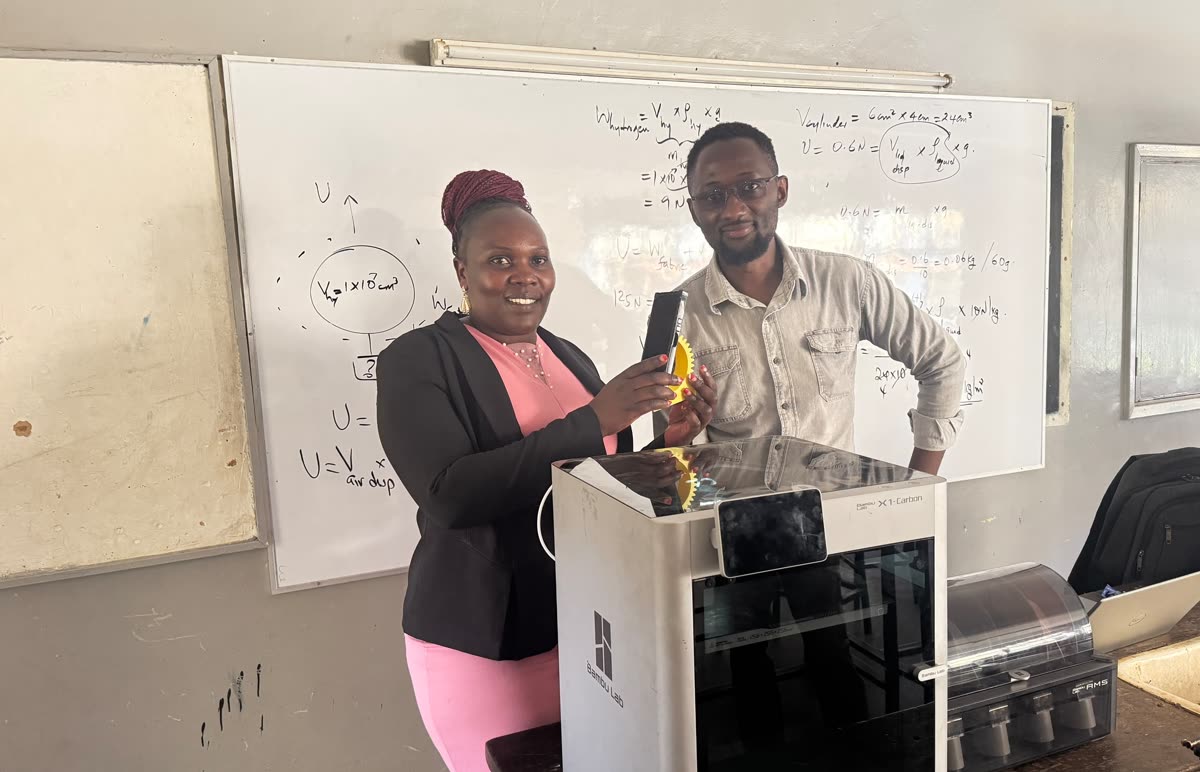
Step 1: Designing in CAD
Every print starts as a digital model. In computer-aided design (CAD), students sketch a shape, give it real measurements and turn it into a 3D object. It's the same thinking students already use in art class, with proportion, depth and 2D-to-3D shapes, applied to something that has to fit and work. A gear is a good first project, because it shows how precise measurements turn into a part that moves.
Step 2: Choosing a material
Most desktop 3D printers use plastic filament. The sessions cover common options:
- PLA is easy to print and a good choice for beginners and display pieces.
- PETG is tougher and more heat-resistant, which suits functional parts.
- Recycled-plastic filament is made from reprocessed plastic. The sessions use both new and recycled filament. Recycled filament links the 3D printing work to the recycling and waste-to-art lessons students already value in Unity's art club.
Step 3: Slicing, printing and finishing
Slicing. Software cuts the model into thin layers and sets the speed, infill and supports. Printing. The printer lays the filament down one layer at a time. Printers with a multi-material unit, such as the AMS shown above, can switch between filaments. Finishing. Students remove supports, sand rough edges and check the part against the design.
Why teach 3D printing in schools?
3D printing turns abstract maths and design into something real. At Lavington Girls, students write about colour theory, 2D and 3D shapes, depth, proportion and shading, and some now plan to study art, design or architecture at university.
Sponsor the next session
Help the 3D printing program grow with equipment, materials or mentoring. To sponsor:
- Pay by M-Pesa Paybill 516600, account 944330#SPONSOR.
- WhatsApp your receipt to +254 798 598 220.
For larger partnerships, use the form at unitycollective.art/partner/ or email unityartcollectiveio@gmail.com.
FAQ
Does Unity Art Collective run 3D printing workshops for students in Nairobi?
Yes. Unity runs introductory 3D printing as part of its school program, starting with a pilot at Lavington Girls School.
What do students learn in a 3D printing session?
CAD design, filament materials such as PLA and PETG, and the print process of slicing, printing and finishing.
What printer is used?
The session pictured used a Bambu Lab X1-Carbon with an AMS unit.
How can I sponsor a session?
Pay Paybill 516600, account 944330#SPONSOR, then WhatsApp your receipt to +254 798 598 220.
Related: The 3D printing pilot · The Lavington Girls program · Sustainability · Propose a partnership